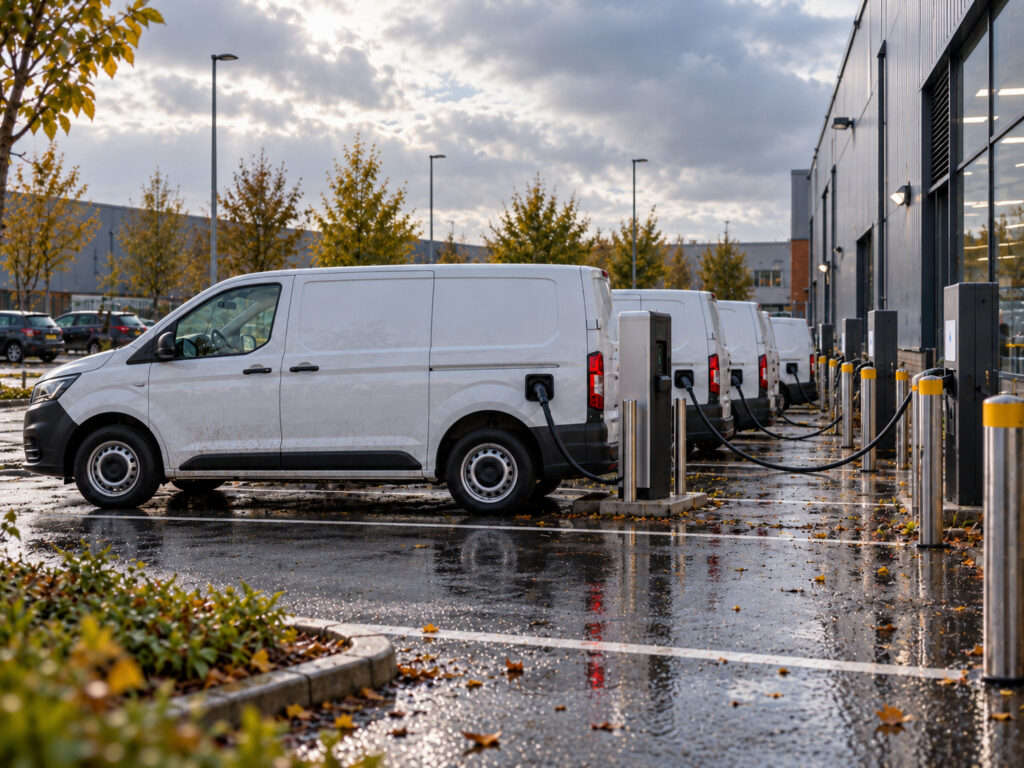
What Should Businesses Consider Before Switching to an Electric Fleet?
More UK businesses than ever before are making the transition from petrol to electricity, demonstrating quite how ready great swathes of the private sector are for a new kind of future. It’s proof that, while growing constraints on emissions and expectations for CO2 neutrality in the future are useful for capturing stragglers still operating in the ‘dark ages’ of carbon efficiency, many of us actually want to take that big step forward ourselves.
Still, it’s not a simple case of trading-in one vehicle for another. You need to be conscious of the learning curve and sitewide adaptations that need to take place before you can reap the full benefits of operating an electric fleet with sufficient commercial EV charging capacity.
Focus on the Long-Term Costs Rather than the Immediate Cost
Upgrading your entire fleet to EVs and introducing the charging infrastructure you need to make that sustainable is a major operational overhaul that comes with some disruption and a significant bump to overhead costs.
But this isn’t a short-term solution to a single problem. Instead, it’s a long-term investment into reducing operational costs, preparing for future regulatory changes regarding carbon emissions reduction, and improving brand image, all with the potential support of tax incentives, including the 100% First Year Allowance (FYA) for qualifying EV charging infrastructure.
Electric vehicles are simpler to maintain. There’s no combustion engine constantly wearing itself out. With the global fossil fuel crisis still raging on, keeping them on the roads comes with a much greater certainty, too – particularly if you also invest into your premises’ solar capacity.
How Solar and Battery Storage Can Offset the Cost
Electric vehicle charging points can either draw electricity from the grid, just as the rest of the property may do – or, with the right solar system in place on the property, they can charge vehicles using free, clean electricity generated from the sun.
Of course, this is a lot simpler to envision for a household. A modest, rooftop solar pv system will generate plenty of electricity, some of which can be stored in a battery and used to charge one or two household EVs, and any leftover can be fed into the grid for a small financial incentive.
It’s the same premise for a site operating from commercial solar panels but, as you would imagine, the solar system needs to be significantly more robust and designed efficiently around the precise demands of the site itself.
This is arguably the best long-term solution to load management. Plugging in every electric vehicle at 4:45pm could exceed your site’s available electrical capacity, and future energy uncertainties could leave you without charging capabilities for stretches of time. Generating your own electricity through commercial solar panels, supported by battery storage and smart charging, can help reduce grid demand and manage charging costs.
Range Management Training
A lot of the reticence toward EVs stems from range anxiety, or the fear of getting too far from home and running out of battery. Vans and cars with combustion engines have plenty of options, with petrol stations rarely more than a few miles apart. We’re used to those last-minute ‘better fill up’ moments, so it’s easy to envision a scenario in which the same thing happens in an EV. The problem is, ‘filling up’ takes hours, rather than moments.
Luckily, there’s an alternative to hitting the red and realising you’re 40 minutes from your charging point, and that’s simply shifting your mindset to plan ahead, and develop a routine around driving habits so that staying in the green feels as routine as maintaining tyre pressure or keeping windscreen fluid topped up.
Range management training is the best way to combat range anxiety in your team. Once used to the ‘new normal’, it’s unlikely you’ll encounter any situations where employees are desperately seeking out a public charging port halfway through the day.