Introduction
For businesses and homes across the UK, an alarm has been going off for years now.
This isn’t like any other morning alarm, where you can just roll around and give it a hearty smack. This is a constant, high-pitched alarm that follows you wherever you go, obscuring itself in the rabble of everyday life, and yet very clearly signalling that something is wrong and needs fixing.
Over the last few years, we’ve all become accustomed to hearing it: it sounds like another news story about rising energy prices, or another conversation about supply shortages and the cost of living – and it’s easy to become numb to it all.
When every week seems to bring another headline, it can be difficult to separate the genuine opportunities from the constant stream of news. Indeed, the conversation around energy has become so broad and fast-moving that, for many homeowners and businesses, knowing where to begin has become the biggest challenge of all.
But beneath all that noise, one thing remains remarkably clear: the decisions we make about energy today are likely to shape the way our homes and businesses operate for decades to come.
Past to Present
Not too long ago, energy was something most of us rarely thought about.
Electricity came from the grid, heating came from a boiler, and the monthly bill was simply another cost of running a home or business. It was simple. Predictable. Sure, prices fluctuated from time to time, but there was little incentive – or opportunity – to think much further ahead.
Today, however, that picture looks very different. Or at least, it can do. Energy has become something we can generate and store, with smart technologies helping us to manage it and even share it across systems and devices.
This means that homes and commercial buildings no longer have to be passive consumers of electricity, but can be active participants in their energy future – participants that generate and optimise energy for themselves, no longer relying on the grid alone to meet all of their energy demands.
In other words, energy as a resource can be a methodological asset that can influence sustainability and value, and that shift in thinking is what underpins the idea of a long-term energy strategy.
A Long-Term Solution
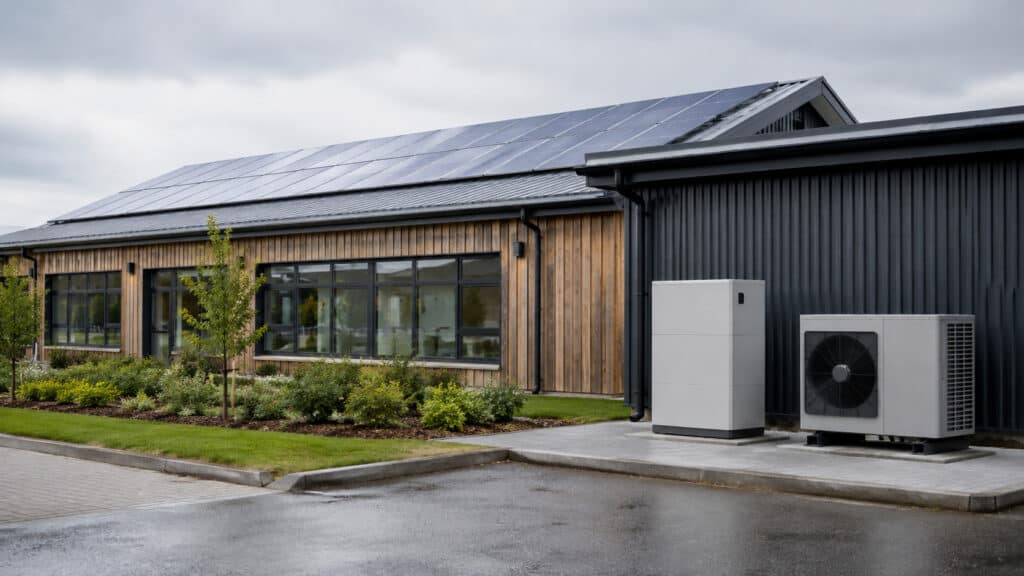
Solar PV, battery storage, EV charging, HVAC, heat pumps. These are all technologies that can play a crucial role in creating a more efficient and sustainable energy future.
But by themselves, they can also create the illusion of progress.
Let’s imagine a manufacturing business. Like many of its competitors, this business has seen energy costs become an increasingly significant operational expense, with its production processes requiring a consistent supply of energy throughout the day – while lighting, machinery, ventilation and office facilities all contribute to a substantial baseline demand.
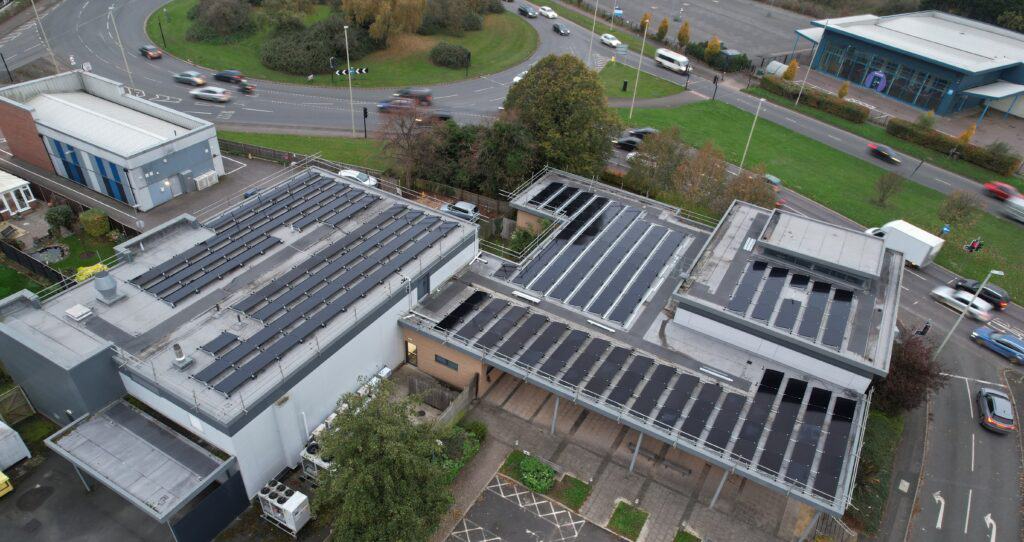
Looking for ways to reduce its reliance on the grid, the business decides to install commercial solar PV across the available roof space. This makes sense: during daylight hours, the system can generate renewable electricity on-site, cutting out the middleman and lowering operating costs across the board.
But a business doesn’t operate only when the sun is shining. For a manufacturing company, specifically, production may very well continue into the evening, with energy demand being highest at times when solar generation is lower.
There might also be periods where the building generates more electricity than it can immediately use, leading it to export excess energy back to the grid rather than keeping it available for when it’s needed most. Without a way to store or intelligently manage that energy, this business might feel like it’s taken control, but is actually just as dependent on the grid as it ever was, using it to bridge the gap between generation and demand.
This is where a wider energy strategy changes the picture. Imagine if that business combined its solar PV with commercial battery storage, using it to capture excess electricity generated during peak daylight hours and deploy it when it’s most valuable.
Add intelligent energy management into the system – giving the business a clear understanding of where energy is being consumed – commercial HVAC to replace old air conditioning units, and heat pumps to take over from gas-fired boilers, and the result is no longer just a building with solar panels on the roof, it’s a connected energy system where everything works together to achieve true independence.
From Generation to Integration: Building a Long-Term Strategy
When we’re talking about a long-term strategy, we’re talking about an interconnected system of technologies and processes. Rather than using something like solar PV or heat pumps in isolation, you’re approaching energy as a complete ecosystem, where each element supports and enhances the next. There are eight key stages.
Generate
The first is generation. At the foundation of any energy strategy is understanding where your energy comes from. As we mentioned before, traditionally, homes and businesses have relied almost entirely on electricity supplied through the grid, with limited control over how that energy is produced or what it costs.
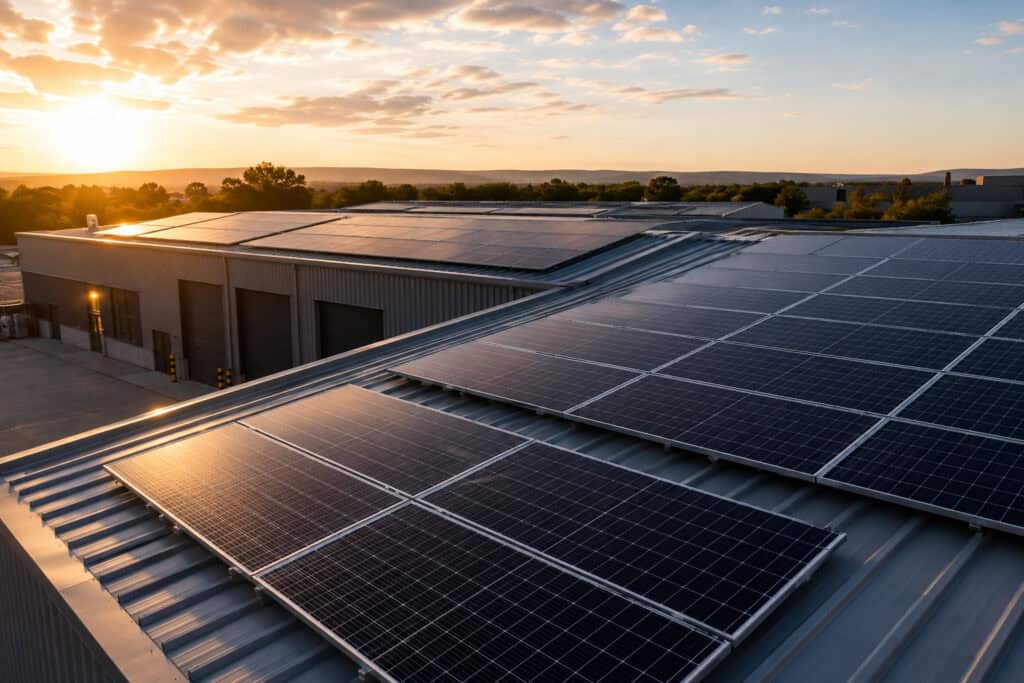
Technologies such as solar PV have changed that relationship. Whether installed across the roof of a commercial building or integrated into a domestic property, solar generation can effectively provide a cleaner source of power, using photovoltaic technology to produce ‘independent’ electricity rather than relying on energy purchased solely from external suppliers.
For businesses in particular, this can have a significant impact. From office buildings to manufacturing facilities, sites like these often have substantial electricity demands, with energy being consumed by lighting, equipment, machinery, heating, cooling, and plenty of other operations.
Even at home, however, the benefits of domestic solar panels are similar, even if the scale and pattern of energy use might be different. The important thing is that generation is only the first element of a wider energy strategy; the sun doesn’t always shine when energy demand is highest, and a building cannot always use the electricity at the exact moment it’s produced.
Store
This is where the next stage becomes essential: actually storing the energy that you’re generating. Solar PV is at its most effective when the electricity it produces can be used at the right time, but the problem is that our generation and consumption don’t often align.
At home, for instance, electricity usage peaks in the evening when solar output is at its lowest, so in order to make the most of the energy being generated, you need domestic battery storage to bridge this gap, capturing surplus electricity and making it available when it’s needed most.
Instead of allowing excess generation to go unused or exporting it back to the grid, stored energy can instead be employed during those periods of higher demand, ensuring the building is supported and flexible beyond the hours of peak production.
Use Efficiently
So long as it’s used efficiently, we might add. Using energy in the right way isn’t just about pinpointing consumption from a timing perspective, it’s about how and where that energy is being used. In other words, you’re looking at the entire operation. How is your building heated and cooled? How is your equipment powered? When does demand peak and where can improvements be made?
To give an example, let’s look at HVAC. Ventilation and air conditioning are often some of the largest energy demands within a building, particularly in commercial buildings where maintaining comfortable temperatures and air quality is essential for employees and customers. The challenge is that these systems are often required at the same time as other high-demand operations, which is why they represent one of the biggest opportunities for improving how energy is used.
With solar PV, battery storage, and a modern HVAC solution, the way a building manages this demand can change significantly – rather than simply generating energy and using it as it becomes available, the building can begin to make smarter decisions about when and where that energy is most valuable, directing it to everything from lighting and air conditioning to other essential building operations whenever demand requires it.
Electrify Heating
Total efficiency can also be achieved through electrifying your heating – another major energy demand that costs the average household and business thousands of pounds every year. For decades, most buildings have relied on combustion-based systems such as gas boilers to provide heat.
While familiar and widely used, these systems have created a dependency on fossil fuels and, at the same time, represent one of the largest sources of energy consumption across the board.
Heat pumps offer a different approach. Rather than generating heat by burning fuel, these systems use electricity to extract and transfer heat from the surrounding environment, moving existing heat from the air, ground, or water into a building instead of creating it from scratch.
To put that into practice, imagine a commercial building relying on a traditional gas boiler. The boiler has to burn fuel whenever heat is required, meaning the building is directly tied to gas consumption and, as such, fluctuating fuel prices.
By replacing that system with a commercial heat pump, however, the building is approaching energy in a fundamentally different way – using electricity to move heat rather than burning fuel to create it. Now imagine that heat pump combined with solar PV and battery storage – where heat is not a separate cost, but a resource that sits inside a connected, cost-efficient network.
One energy source, used efficiently to power multiple systems and therefore cut the costs of running the building as a whole.
Electrify Transport
You can even include transport in that wider energy strategy. Traditionally, vehicles have existed separately from the energy systems that power our homes and businesses – fuel was purchased, stored and consumed independently from everything happening inside the building.
But again, the rise of electric vehicles changes that relationship, introducing another significant area of energy demand that can be managed alongside generation, storage, and consumption. As for how this can be done, it begins with understanding when and how vehicles are being used.
For a business, the challenge is not just installing commercial EV chargers, but understanding all the factors that go along with that. Fleet movements, operational schedules, electrical capacity. These are all considerations that determine how and when charging should take place, and so a wider energy strategy is needed to manage the whole thing intelligently.
A warehouse with solar PV, for instance, can use daytime generation to replenish vehicles that return throughout the afternoon, while battery storage can be used to provide additional capacity when charging demand exceeds the electricity being generated.
For homes, the same principle applies, just at a different scale. A household with an EV doesn’t have the same level of demand as a commercial fleet, and so the challenge is mainly one of timing – most people return home in the evening, which is also when electricity consumption increases, so rather than immediately charging a vehicle as soon as it arrives home, smart charging can allow the process to happen when it’s most beneficial.
The point is that it’s all interconnected and designed to ensure one element supports the other. For most people, of course, their vehicle is the centre of their life, and so it makes sense to take it from the outside of their home ecosystem to the inside, integrating it more seamlessly into their overall strategy.
Optimise
You could say that the above idea is all about optimisation. You’re not just optimising your energy usage, you’re optimising your daily routine, your schedule, your life. To do this more efficiently, however, it’s important to understand how each different element in your system interacts.
A truly optimised energy system doesn’t simply contain multiple technologies, it understands how those technologies influence one another. Yes, a heat pump, battery, solar PV system, and EV charger can all be highly effective individually, but without coordination, they’re still operating as separate parts.
Optimisation comes from creating a system that can respond to changing conditions and make decisions based on what’s happening in the moment. For instance, a building might have periods where electricity demand increases unexpectedly, such as during colder weather when heating requirements rise.
An intelligent energy management system can recognise these changes and adjust how different tech operates, without the need for constant monitoring or intervention.
This is also why data is one of the most valuable parts of a modern energy strategy. Every building has its own unique patterns: when electricity demand rises, which systems consume the most energy, where inefficiencies occur – the list goes on and on.
Understanding these patterns allows you to not only see what’s happening across your system, but actively shape how that system performs in the future.
This can then create a continuous cycle of improvement. Rather than installing the technology and assuming the job is complete, your system can provide the information needed to refine its performance, making it as tailored and responsive as possible.
Integrate
Once you have everything in place, with a smart management system that allows you to understand and optimise each piece, the individual technologies almost disappear.
So instead of thinking about solar PV or heat pumps as separate investments, they become part of the way the building naturally operates, with every decision centred around outcomes – including the reduction of operational costs, but also improved comfort, increased resilience, lowered emissions, and preparedness for future expansion.
In that sense, integration is about changing the relationship you have with energy. Energy becomes another resource that can be planned and continuously refined, rather than simply purchased and consumed, and the result is a building that’s not only more efficient today, but better equipped to adapt tomorrow. Whether energy prices fluctuate or regulations evolve, you have an integrated system that has the flexibility and resilience to respond.
Conclusion
Here at GSM Ltd, we’ve spent the last 35 years helping homeowners and businesses reduce their reliance on rising energy costs, offering a range of renewable energy solutions that can be brought together into one whole.
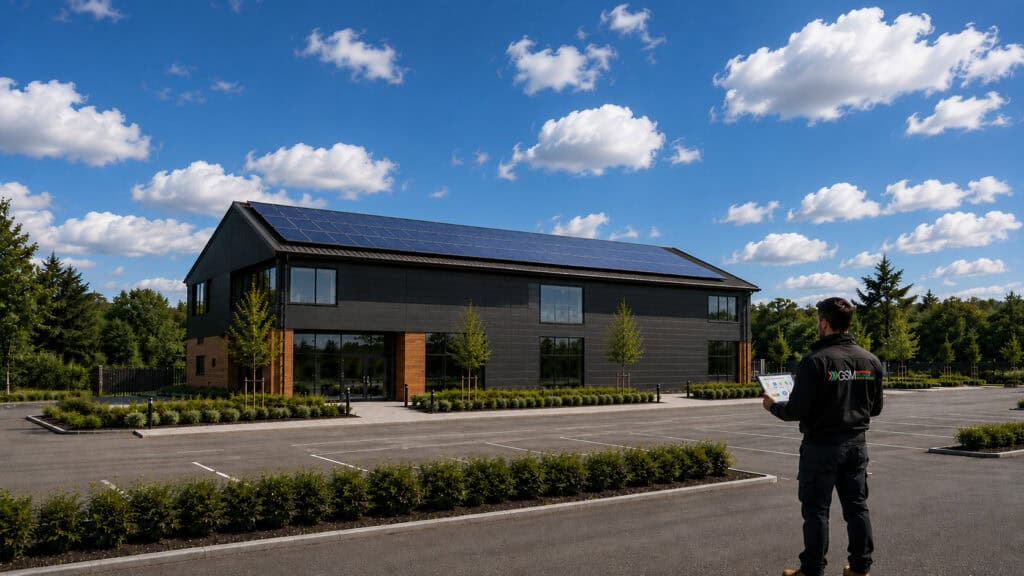
Installation is simple – with a property survey needed to understand your building’s energy demands and long-term objectives – and since every building is unique, we ensure that every solution is tailored so that it can be integrated seamlessly.
The only step you need to take between now and installing that system is recognising the alarm that has been sounding so continuously – the alarm of rising costs, increasing demand, and an uncertain energy future – and finally doing something to make it go quiet. The only way to do that is by looking towards that future and thinking about the kind of building – be it commercial or domestic – you want to have.
If it’s a building that works for itself, where each technology complements one another in improving energy efficiency and reducing costs, then get in touch with GSM Ltd today. Our team will walk you through all the next steps and put you on the road towards building a strategy around your property, your priorities and your future.